English Is a Programming Language Now
By Riz Pabani on 12-Apr-2026
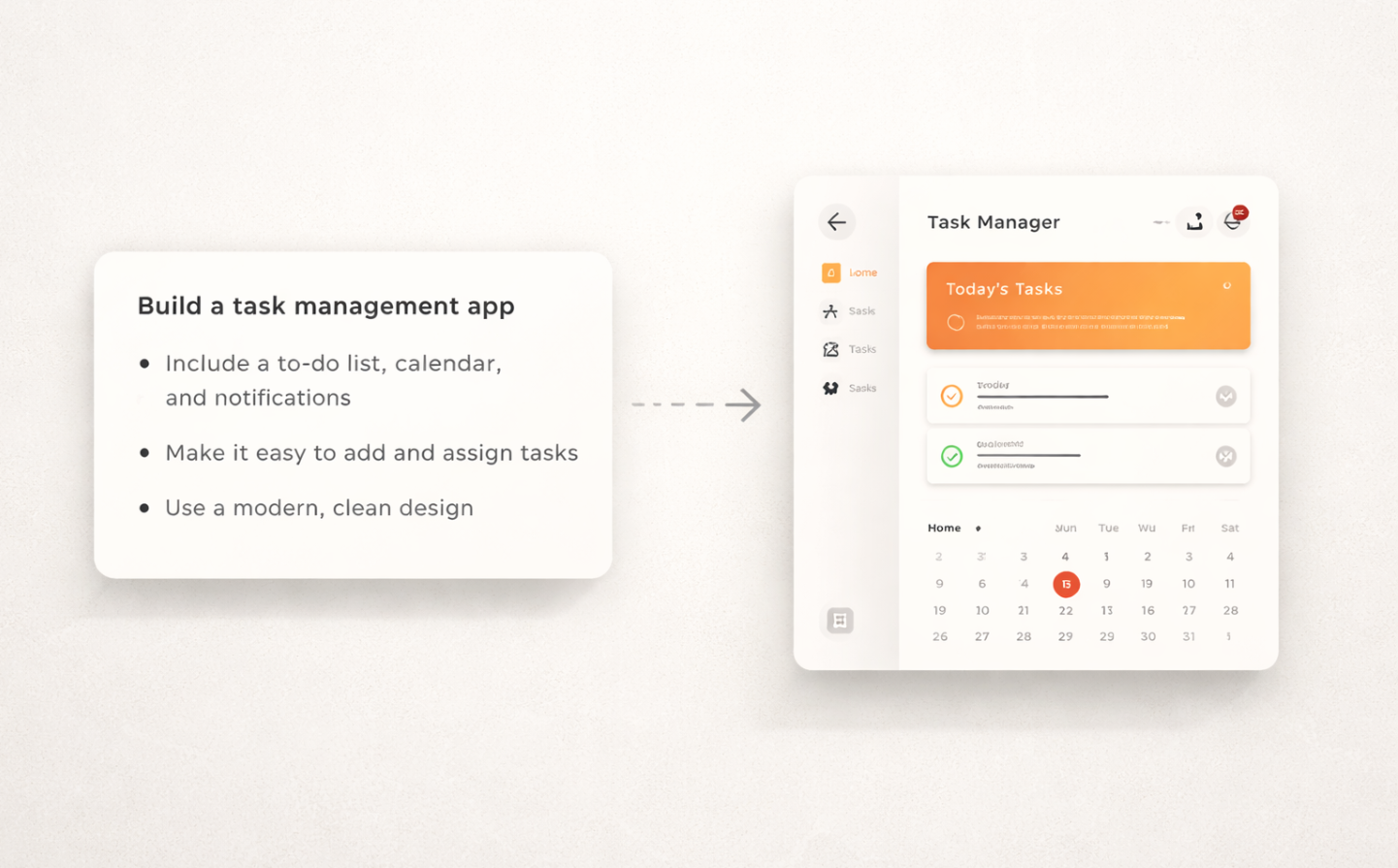
Andrej Karpathy posted this in January 2023: "The hottest new programming language is English." He wasn't being cute. He was describing something he'd already seen happening inside the AI labs.
Three years later, it's not a prediction. It's a fact.
Karpathy himself hasn't typed a line of code since December 2025. He coined the term "vibe coding" to describe building software by describing what you want in plain language instead of writing it in Python or JavaScript. Then, barely a year later, he said vibe coding was already passe. The new default is what he calls "agentic engineering." You describe the task. AI agents go and build it. You review what comes back.
That's three stages in three years. Writing code, then talking to AI that writes code, then managing AI agents that handle the whole thing. Each step requires less syntax and more clear thinking.
The numbers are absurd
More than half the code committed to GitHub in early 2026 was AI-generated or AI-assisted. That's not a forecast. That's GitHub's own data.
Cursor, the AI coding tool, hit $2 billion in annual revenue in February 2026. It doubled in three months. For context: Slack took five years to reach $1 billion. Zoom took nine. Cursor did the second billion in a single quarter.
Lovable, a tool that lets non-engineers build working apps by describing what they want, crossed $300 million in revenue with a $6.6 billion valuation. 63% of its users have zero programming background.
And 25% of Y Combinator's Winter 2025 batch had codebases that were 95% or more AI-generated. These are funded startups shipping real products to real customers.
A lawyer beat 500 developers
This is the story I keep coming back to.
13,000 people applied to Anthropic's Claude Code hackathon earlier this year. 500 got in. I looked at who made the final five: a California housing lawyer, a cardiologist from Brussels, a road technician from Uganda, a fencer, and a musician. One professional software engineer out of five.
First place went to the lawyer. He built a permit-processing app for accessory dwelling units in California. In six days.
The cardiologist took third. He built a patient follow-up tool, coding day and night from the hospital and while flying Brussels to San Francisco. Seven days.
They didn't win because they learned JavaScript over a weekend. The lawyer won because he understood California housing code better than any developer in the room. The cardiologist won because he understood cardiology. The road technician won because he understood Ugandan road infrastructure.
The gap between "I know what this should do" and "I can make it do that" has all but vanished. Domain knowledge matters more than syntax now.
I've seen this happen in 90 minutes
I run co-building sessions where someone walks in with an idea and walks out with a working thing. Not a wireframe. Not a plan. A thing that works.
A programme director came to a session with a monolithic system instruction he'd been using inside ChatGPT Projects. It processed applications from researchers wanting to join his programme. It sort of worked, but it was brittle, lived inside a chat window, and nobody else could use it.
In 90 minutes we turned that into a fully working web app. Same logic, proper interface, shareable with his team. He'd been describing what he wanted to a chatbot for months. We just pointed that description at a tool that could actually build it.
One client came in wanting to test a business idea for a Pokemon card collectibles shop. We built a fully designed storefront on the call. Featured cards section, trending items, navigation. She left with something she could launch the next day.
Another client went quiet for a second, then said: "It's incredible. It's just sunk in now. I could ask it to make a website about my book."
That moment of realisation is what I see in almost every session. The shift from "I'd need a developer for that" to "wait, I can just describe it?"
That's what it means for English to be a programming language. Not that you type sentences instead of code. But that the ability to describe what you want clearly is now enough to build it.
It's not magic, though
Here's where I have to be honest, because this is the part most people writing about vibe coding skip.
45% of AI-generated code contains security vulnerabilities. That's not a scare statistic from someone who hates AI. That's from code quality audits.
Developer trust in AI output actually dropped in 2026. Only 29% of developers say they trust AI code to be accurate, down from 40% in 2024. The people using it most are trusting it less, not more.
Amazon had multiple critical failures from agent-written code. They now require human review on everything going into AWS. Garry Tan at Y Combinator has said founders still need classical coding understanding to sustain products at scale, because reasoning models aren't good at debugging.
Codebases built through extended vibe coding sessions tend to become tangled, because no human designed the architecture. You can build fast. Maintaining what you built is a different problem.
So yes, English is a programming language. But "make me an app" gets you something generic. "Make me an app that does X for Y people, with these three screens, handling this edge case" gets you something useful. The precision of your language determines the quality of the output.
The skill is specification, not syntax
This is the bit that matters if you're not a developer and you're reading this wondering what it means for you.
The bottleneck used to be finding someone who could turn your idea into code. That bottleneck is gone. The new bottleneck is being able to describe what you actually want with enough precision that an AI can build it well.
That's not a coding skill. It's a thinking skill. Can you break a problem down into steps? Can you describe what "done" looks like? Can you spot when the output is wrong and explain why?
Garbage in, garbage out still applies. It always will. The difference is that the "garbage" isn't bad code any more. It's bad instructions. Vague briefs. Unclear specifications. "Make it look nice" instead of "use a two-column layout with the pricing table on the right."
This is why I think AI training matters more now, not less. Not training on how to write Python. Training on how to describe, specify, review, and iterate. How to be a good manager of an AI that builds things for you.
That programme director I mentioned earlier is a good example. His original ChatGPT setup worked because he'd spent months refining one giant prompt. But it was all in his head.
When we sat down to build the web app, the first thing we did wasn't coding. It was writing out exactly what the app needed to do, step by step, in plain English. Which fields does the application form need? What happens after someone submits? Who reviews it, and what do they see?
Once those answers were written down clearly, the app practically built itself. The specification was the hard part. The building was fast.
What to do with this
If you've been sitting on a project because you thought you needed a developer, you probably don't. Not for the first version. Not to test whether the idea works.
A business idea that would have cost five to ten thousand pounds and taken four to eight weeks to prototype can now be built in an afternoon. I've watched it happen dozens of times.
The Anthropic hackathon proved it at scale. My sessions prove it one person at a time. Billions of dollars are flowing into tools that make this possible for anyone.
English is a programming language. But like any language, you get better at it with practice. And like any programming language, the people who learn it properly will build better things than the people who guess.
If you want to see what this looks like for your specific idea, I run 90-minute sessions where we actually build the thing. Or if you already know what you want to build, book a co-build session and we'll ship it together.
Not sure which one's right? Message me. I'll tell you honestly.
Riz Pabani is an AI trainer based in London, offering 1:1 and group AI training sessions for individuals and businesses worldwide. About Riz
Related Articles
What a context window is, and why ChatGPT forgets
Why does ChatGPT forget things in long chats? A hands-on look at the context window, using two Harry...

Software Is Solved. The Gold Rush Is Somewhere Else.
Vibe coding for non-engineers is real. AI labs sell tokens — the gold rush is domain experts who can...
The Plug and Play AI Myth — 600 Decision-Makers Agree
The plug and play AI myth is dead. Cognizant surveyed 600 decision-makers — generic AI doesn't work....

Your AI Token Bill Is About to Rival Your Salary Bill
AI token cost per employee is approaching salary levels. Here's the 2x productivity bar, what to tra...