The Plug and Play AI Myth — 600 Decision-Makers Agree
By Riz Pabani on 12-Mar-2026
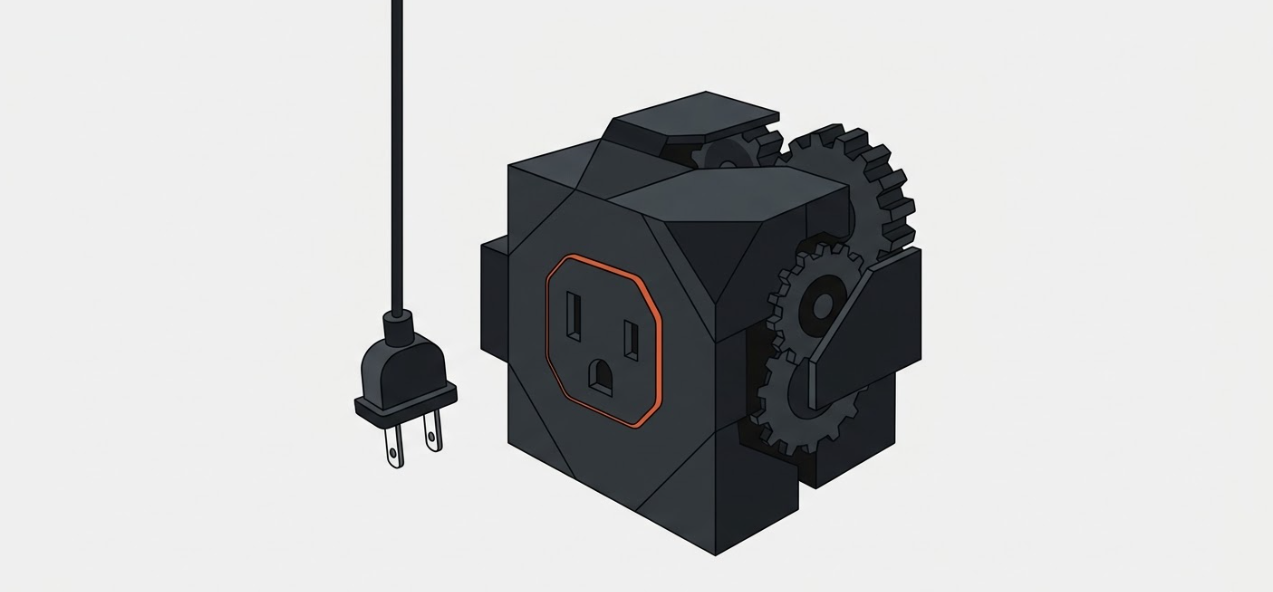
Cognizant just surveyed 600 AI decision-makers and interviewed 38 senior executives across four countries. The headline finding won't surprise anyone who's actually tried to roll AI out inside a business: off-the-shelf AI doesn't work.
Not "doesn't work well." Doesn't work. Generic AI solutions were cited as a leading reason enterprises reject an AI provider entirely. Right alongside "lack of industry-specific expertise" and "can't integrate with our existing tech stack."
I've been saying a version of this in every training session I run. Now there's a 600-person study backing it up — the plug and play AI myth is officially dead.
The gap between ambition and reality
The numbers paint a familiar picture. 63% of enterprises report a gap between their AI ambitions and their actual capabilities. 84% have formal AI budgets. Over half are spending more than $10 million a year on AI.
And still, the top three problems they face are regulatory concerns, inability to demonstrate ROI, and — this is the one that gets me — "lack of clear AI strategy and vision."
That last one is worth sitting with. These aren't companies that haven't heard of AI. They're spending eight figures on it. And the biggest blocker isn't technical. It's that nobody's told them what to actually do with it.
I trained a team at a company that had bought 5,000 Copilot licences. Five thousand. They'd hired a Microsoft-approved vendor to run the rollout. But nobody had stopped to ask whether Copilot was actually the best tool for their use cases — or whether the models it was running on were the strongest available. They'd spent the budget. They just hadn't spent any time thinking about what they were buying.
Why off-the-shelf fails
I think about this through the lens of what my colleague Sacha Windisch at Exponential Partners calls "One-of-One. At Scale." His argument: custom software used to be reserved for Fortune 500 companies with Fortune 500 budgets. AI has collapsed the cost of building software to near zero. Bespoke solutions are now viable for any business.
The flip side of that argument is what the Cognizant research confirms: the generic stuff doesn't fit. It never did. Enterprises tolerated it because custom was too expensive. Now custom is cheap, and they're walking away from SaaS products that force them to bend their workflows around someone else's assumptions.
Every business has its own quirks. Its own terminology, its own compliance requirements, its own weird spreadsheet that Dave from finance built in 2014 and nobody dares touch. No off-the-shelf AI product accounts for Dave's spreadsheet. A configured, purpose-built solution can.
The trust gap is real
One of the more interesting findings: IT services firms hold a 23% trust advantage over management consultancies when it comes to AI adoption. Decision-makers want people who build, not people who advise.
This tracks with what I see. When I run sessions with businesses, the moment something goes from abstract to working prototype, the energy in the room changes. I've written before about that shift — when someone watches a working tool get built in front of them, the conversation moves from "what could AI do?" to "wait, can we do this for our invoicing process?"
Consultancies produce decks. Builders produce tools. The Cognizant study suggests enterprises are figuring out which one they actually need.
What this means if you're not a Fortune 500
The Cognizant research surveyed large enterprises. But the principle applies even more to smaller businesses and individuals.
If a company spending $10 million a year on AI can't make generic tools work, what chance does a five-person team have with the free tier of some SaaS product that bolted on "AI features" last quarter?
The answer isn't to spend more. It's to be more specific.
I see this constantly. Someone subscribes to an AI tool, uses it for a week, decides AI doesn't work, and cancels. What they actually discovered is that that particular tool, configured in the default way, for a generic use case didn't work. That's a very different conclusion.
The businesses that get value from AI are the ones that take time to configure it. To feed it their own context. To tell it what good looks like in their world. Garbage in, garbage out — that rule hasn't changed just because the tools got smarter.
One client came to me frustrated with Gemini. Couldn't get anything useful out of it. After a session, we switched to the Pro models with stronger reasoning, set up context management so the AI actually understood the task, and built a Gem with custom instructions for the repetitive work they were doing daily. Same platform, completely different results. Their word for it was "astonishing."
The "messy middle" is where most companies live
Cognizant's researchers describe the current state as "the messy middle" — and that phrase is perfect. Most businesses aren't AI laggards ignoring the technology entirely. And they're not AI-native companies building everything from scratch. They're somewhere in between, with a budget, some experiments running, and no coherent strategy tying it together.
The messy middle is where I spend most of my time. Training sessions with people who've used ChatGPT but don't know what else is out there. Businesses that bought Copilot licences but can't point to a single workflow it actually changed.
The way out isn't buying another tool. It's understanding what you already have, figuring out where the real bottlenecks sit, and building something specific for those bottlenecks.
This is the agent spectrum problem in practice. Most businesses are stuck at Level 1 or 2 — typing prompts into a chat window and hoping for magic.
The real value shows up at Levels 4 and 5, where AI is configured to respond to data events and run on a schedule. But you can't jump there without understanding your own workflows first.
The uncomfortable truth
Ravi Kumar, Cognizant's CEO, put it plainly: AI success isn't about deploying isolated models. It's about engineering intelligence into the enterprise with purpose-built solutions.
I'd say it more simply: there is no shortcut.
You can't skip the understanding phase. You can't buy your way out of the strategy question. You can't outsource the thinking about how AI fits into your specific work to the AI vendor selling you the product.
The 600 decision-makers in this study are learning that lesson at enterprise scale. But it applies at every scale. The freelancer trying to use AI for client proposals. The operations manager looking for automation opportunities.
All of them need the same thing: specificity. Not a generic product. Not a demo that looks impressive but doesn't fit their data.
They need someone to help them figure out the right question first.
What to do next
If you're in the messy middle — you've got AI tools, maybe a budget, but no clear picture of what's actually worth building — book a session or drop me a message. I'll tell you honestly whether you need a custom solution or just a better prompt.
Related Articles

Software Is Solved. The Gold Rush Is Somewhere Else.
Vibe coding for non-engineers is real. AI labs sell tokens — the gold rush is domain experts who can...

Your AI Token Bill Is About to Rival Your Salary Bill
AI token cost per employee is approaching salary levels. Here's the 2x productivity bar, what to tra...
Claude models compared 2026: Fable, Opus, Sonnet, Haiku
The Claude models compared for 2026: what Fable 5.1, Opus 5, Sonnet 5 and Haiku 4.5 each do best, wh...
Hermes Agent Bot Mode: how I run a fleet of AI bots
Hermes Agent bot mode: seven AI bots that research, draft and review each other's work, and why none...