Your AI Token Bill Is About to Rival Your Salary Bill
By Riz Pabani on 06-Mar-2026

Jason Calacanis mentioned on the All-In podcast that they're hitting $300 a day per agent on the Claude API. That's for maybe 10–20% of the work. Annualised, that's $100,000 per agent.
David Friedberg picked up the thread. They're now deciding what token budget to give their best developers. His line: employees using AI "need to be at least 2x as productive as another employee... otherwise I'll run out of money."
Chamath said it plainly: "When do tokens outpace the salary of the employee? Because you're about to hit it."
That's not a hypothetical. That's four people running real companies, looking at real invoices, going "hang on."
The numbers right now
From their conversation, the rough breakdown:
- Top developers are already approaching salary-equivalent token costs. They're using AI for code generation, debugging, architecture decisions, documentation. They burn through tokens because AI is genuinely making them faster.
- Rank-and-file technical staff sit at maybe 10–20% of that. A few thousand a month.
- Non-technical employees are in the hundreds to low thousands per month. Email drafting, document summarisation, research tasks.
Token costs are falling as models get more efficient. But usage is climbing faster than costs are falling. The net trend line is up.
What I'm seeing with enterprise clients
Most organisations I work with don't track AI token cost per employee at all. They have a subscription to ChatGPT or Claude. Maybe an API account for the dev team. The bill comes in, someone in finance approves it, life moves on.
The pattern with larger clients is more telling. Teams are rolling out Microsoft Copilot, buying thousands of licences. But they're struggling to monitor actual usage. In some cases, they're linking compensation to how many AI use cases teams deploy. That's a sign the spend is getting serious enough to manage, but the tools to manage it aren't there yet.
That's roughly where most companies were with cloud computing in 2012. We all know how that cost line developed.
The 2x productivity bar
Friedberg's framing is the one I keep coming back to. If you're giving an employee $50,000 a year in AI token budget, they need to be at least twice as productive as someone without it. Otherwise the maths doesn't work.
That's a clear, testable bar. And it changes how you think about AI agents and tools.
Some roles clear the 2x bar easily. A developer using Claude Code to ship features three times faster? The tokens pay for themselves in a week. A marketing person using AI to draft content that still needs heavy editing? Maybe not.
This isn't about restricting AI access. It's about being honest that AI is a cost centre, not a magic trick. Cost centres need accountability.
What should you actually track?
Three things, if I were advising a company on this today.
Total AI spend per team. Not just subscriptions. API costs, embedded AI features in other tools, everything. Most companies are surprised by the number when they add it up.
Output quality from your heaviest users. Not a survey. Look at the work. Are they shipping faster? Producing better analysis? If the answer is "I'm not sure," that's a problem.
Explicit token budgets by role. Not to punish anyone, but to create the conversation. When someone hits their budget, the discussion becomes "what are you using it for, and is it working?"
For technical teams, tools like Langfuse are worth looking at. It doesn't just track token usage. It shows you how models are reasoning through requests — which matters when you're trying to understand whether a heavy token consumer is getting good results or just burning through retries.
The confidentiality angle
Chamath raised another point worth flagging. As token costs rise and AI usage becomes central to how people work, the confidentiality question gets harder. Every prompt, every document, every conversation is potentially flowing through a third-party API.
Companies that are aggressive about AI adoption need to be equally aggressive about data governance. Where's the line between "use AI to work faster" and "you just sent our proprietary data to an API endpoint"?
Most companies I talk to haven't figured this out yet. They've got an AI policy that says something vague about "use your judgement." That won't hold when token budgets are six figures.
There's a bright spot though. Open-source models are slowly climbing the lmarena.ai leaderboard. Models you can deploy on your favourite cloud provider's GPU, inside infrastructure that's already sectioned off for your organisation. No data leaving your perimeter.
The trade-off: they're not yet at frontier quality for every task. But for many enterprise use cases they're good enough. "Good enough with full confidentiality" beats "best-in-class with your data on someone else's server" for a lot of companies.
Where this is heading
Chamath suspects a "gigantic leap forward" in token efficiency. Output tokens at one-tenth the current cost. I suspect he's right. But cheaper tokens mean more usage, not lower bills. Just like cheaper cloud compute didn't reduce AWS bills for most companies.
The organisations that handle this well will treat AI spend the way they treat headcount: a serious budget line with expected returns. The ones that treat it like a rounding error will wake up in two years wondering where the money went.
If you're not tracking tokens per employee yet, start. The number might surprise you. And if you want help figuring out which roles in your organisation actually clear the 2x bar, that's exactly the kind of thing I work through in training sessions.
Related Articles

Software Is Solved. The Gold Rush Is Somewhere Else.
Vibe coding for non-engineers is real. AI labs sell tokens — the gold rush is domain experts who can...

The Plug and Play AI Myth — 600 Decision-Makers Agree
The plug and play AI myth is dead. Cognizant surveyed 600 decision-makers — generic AI doesn't work....
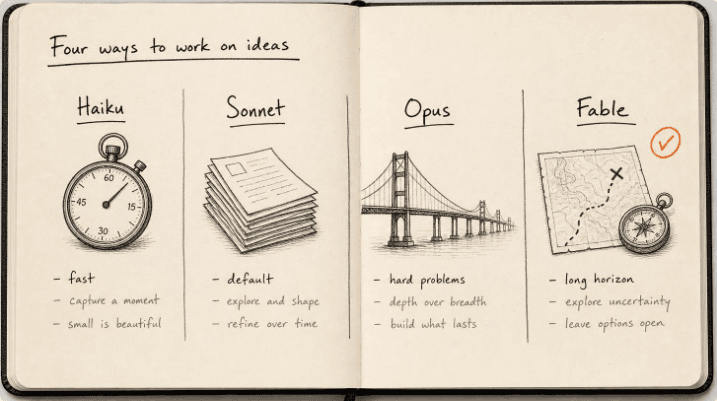
Claude models compared 2026: Fable, Opus, Sonnet, Haiku
The Claude models compared for 2026: what Fable 5.1, Opus 5, Sonnet 5 and Haiku 4.5 each do best, wh...
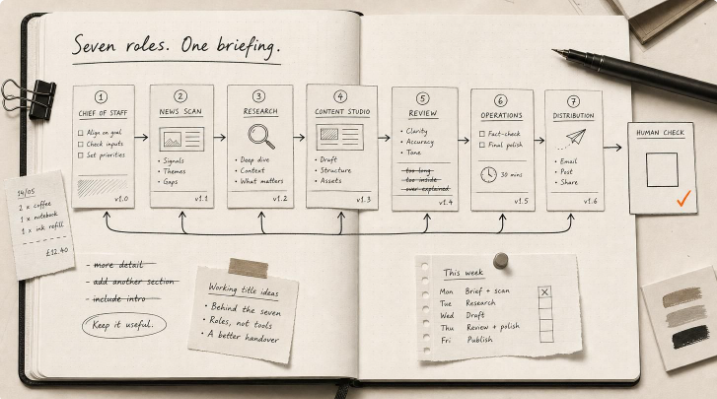
Hermes Agent Bot Mode: how I run a fleet of AI bots
Hermes Agent bot mode: seven AI bots that research, draft and review each other's work, and why none...