Software Is Solved. The Gold Rush Is Somewhere Else.
By Riz Pabani on 16-Mar-2026

Anthropic hit a $14 billion run rate last month. In February alone, they did $6 billion in revenue. That's more than Databricks and Snowflake's entire annual revenue — companies that took 12 years to get there.
These are absurd numbers. But here's what I keep coming back to: who's actually making money from all those tokens?
The bottleneck that disappeared
David Sacks made a point on the All-In podcast this week that stuck with me. The rate-limiting factor on every startup he's ever invested in has been the same thing: not enough engineers to code up the product roadmap.
Not just in Silicon Valley. Everywhere. Fortune 500 companies could barely recruit software engineers at all because they'd all gone to the Bay Area. There was a permanent, structural shortage of people who could turn ideas into software.
That shortage is over.
Brad Gerstner put it bluntly: with Opus 4.6, AI models crossed a threshold. They're no longer competing with IT budgets. They're competing with labour budgets. You can now buy code on a metered basis, per token, the way you buy electricity.
I've seen this play out in my own work. I'm setting up non-technical friends on their own repos and getting them going within minutes. Not after a boot camp. Not after a course. After a conversation where I explain the basics and they start describing what they want in plain English.
Software is commoditised. English is genuinely a programming language now. But I don't think the implications have fully landed yet.
The picks and the shovels
Chamath Palihapitiya was honest on the same episode — possibly the most honest anyone on that pod has been about AI revenue in months.
His point: there is not a single good example of sustained positive margin expansion from AI inside a true corporate enterprise that isn't still a small test. He's spending triple on tokens every three months. His revenue isn't tripling to match. And he reckons his team is at the leading edge.
Sam Altman said it himself: "Our business is going to look like selling tokens."
So the AI labs are selling picks and shovels. They're doing extremely well at it. Anthropic's growth is genuinely unprecedented. But the gold rush isn't the people selling the tools. It's everyone else scrambling to figure out what to actually do with them.
Most companies are still experimenting. Chamath's right about that. They show up to their board with an AI checkbox, pay $200 a month per engineer, and nobody's ticking and tying the output to actual revenue gains. Amazon had multiple sev-1 faults from agent-written code and now requires human review on everything going into AWS.
This isn't a failure story. It's an early story. And the winners are becoming obvious.
Domain experts win
Last week I ran a co-building session with a programme director. No engineering background. Within 90 minutes he'd learned to vibe code — we mapped out the app together in markdown files, sent Codex off to build it, and about five minutes later the web app was up and running in his browser. He was clicking through it, live, on the call.
<!-- [RIZ: CHECK — any detail to add about the programme director's app? What it did, the domain, etc. would make the anecdote even stronger.] -->Look at who placed in the top three of Anthropic's recent hackathon. A cardiologist and a lawyer. Not engineers. For years, software was out of reach for anyone who wasn't a developer. Now the people who understand the actual problems — the cardiologists, the lawyers, the programme directors — can build the solutions themselves. That's what vibe coding for non-engineers actually looks like in practice.
The real value isn't in writing code. It's in knowing what the first draft should look like.
The first draft of your accounts. The first draft of your legal contract. The first draft of your project plan. These are tasks that used to require expensive domain experts working slowly. Now you can get a solid starting point in minutes and have the expert refine it rather than create it from scratch.
For a while, I thought the objection would be: "Sure, but you still need engineers for security, code quality, data integrity." That's true. But even that gap is closing. Anthropic's agent skills now let you type /security or /review and get an automated audit of your code. It's not perfect. But it's good enough that a non-engineer with domain knowledge can ship something real.
70% of jobs didn't exist 40 years ago
Brad Gerstner made this point and I think it's the one that matters most when people panic about AI replacing jobs.
The AI labs have a PR problem. Chamath showed a chart: AI is less popular in America than ICE. It's barely above the Democratic Party and autocratic states. That's partly because the messaging from model companies is incoherent — Dario talks about sentient AI, Sam talks about selling tokens as a utility, and everyone in between is scaring people about 70% of jobs disappearing.
The reality is much murkier and much more interesting.
Yes, AI will change what work looks like. It already is. But the pattern from every previous wave of technology is that more new jobs get created than old ones destroyed. The internet didn't just kill travel agents; it created an entire ecosystem of digital jobs that nobody could have predicted.
The question isn't whether jobs will change. It's whether the people with domain expertise — the ones who actually understand healthcare, finance, law, education — can grab this moment before it passes them by.
Software was the bottleneck. It isn't any more. The new bottleneck is knowing what to build and for whom. And that's a problem domain experts are uniquely qualified to solve.
What this means for you
If you're a domain expert who's been watching vibe coding for non-engineers from the sidelines, the barrier to entry has never been lower. The people winning right now aren't the best programmers. They're the ones who understand their field deeply enough to describe what needs to exist.
I run 90-minute co-building sessions where we actually build the thing. You keep the code, the chat logs, and the recording. If you want to understand what AI training looks like before jumping in, start there.
The gold rush isn't in selling tokens. It's in knowing what to do with them.
Riz Pabani is an AI trainer based in London, offering 1:1 and group AI training sessions for individuals and businesses worldwide. About Riz
Related Articles

The Plug and Play AI Myth — 600 Decision-Makers Agree
The plug and play AI myth is dead. Cognizant surveyed 600 decision-makers — generic AI doesn't work....

Your AI Token Bill Is About to Rival Your Salary Bill
AI token cost per employee is approaching salary levels. Here's the 2x productivity bar, what to tra...
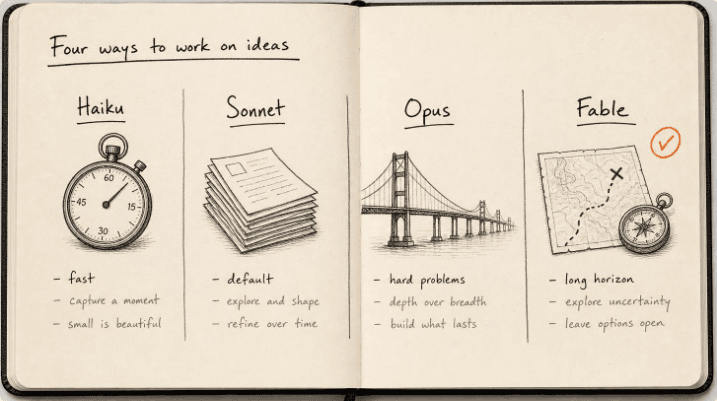
Claude models compared 2026: Fable, Opus, Sonnet, Haiku
The Claude models compared for 2026: what Fable 5.1, Opus 5, Sonnet 5 and Haiku 4.5 each do best, wh...
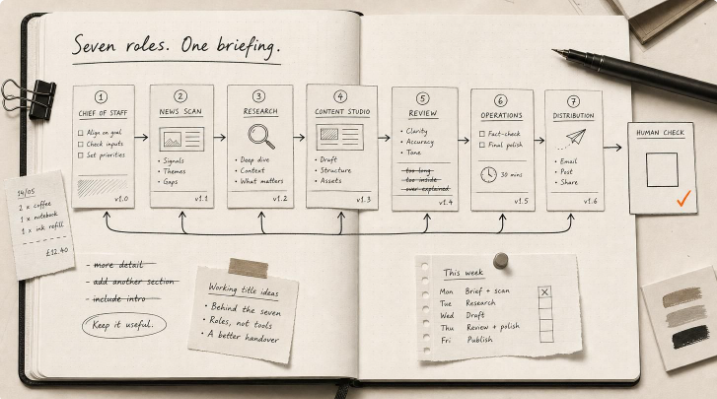
Hermes Agent Bot Mode: how I run a fleet of AI bots
Hermes Agent bot mode: seven AI bots that research, draft and review each other's work, and why none...