5 Lighter OpenClaw Alternatives Worth Trying in 2026
By Riz Pabani on 24-Feb-2026
The agent ecosystem is expanding fast. Not everyone needs 180,000 GitHub stars worth of complexity.
OpenClaw changed the conversation about what AI agents can do. A markdown-driven architecture, persistent memory, proactive scheduling — it turned "AI assistant" into something closer to "AI employee." I've written about it extensively, and I use it daily alongside Claude Code and Cowork.
But here's the thing. OpenClaw is a lot. It's a full ecosystem — messaging integrations, plugin systems, self-modifying code, community servers. For plenty of use cases, that's overkill. And the security concerns I've flagged before haven't gone away. Giving an LLM broad system access still makes a lot of people (rightly) nervous.
So it's worth knowing what else is out there. A new wave of lighter, more focused agent frameworks has emerged in early 2026, and some of them are genuinely good. Here are five OpenClaw alternatives worth a look.
NanoClaw — The Security-First Option
NanoClaw is what you'd get if you rebuilt OpenClaw with containment as the starting point rather than an afterthought.
It runs inside containers by default, which means your agent environment is isolated from the rest of your system. That's a meaningful difference from OpenClaw's approach of running with broad access and hoping nothing goes wrong. It still supports WhatsApp integrations, has memory features, and can run scheduled background jobs — but the blast radius if something misfires is dramatically smaller.
The other thing worth knowing: NanoClaw integrates directly with Anthropic's Agents SDK. If you're building on Claude-based workflows (and if you're reading this blog, you probably are), that's a natural fit.
Best for: teams who want the agent automation pattern but with proper guardrails around execution.
PicoClaw — The Minimalist's Pick
PicoClaw strips everything back to basics. It's tiny, it's fast, and it deploys anywhere — your laptop, a container, an edge device.
There's no massive plugin ecosystem. No social network for bots. No religion invented by AI agents (yes, that happened — look up Crustafarianism if you missed it). PicoClaw just does the fundamentals: automate repetitive tasks, enable agent workflows, stay out of the way.
If you've ever felt like setting up OpenClaw was like assembling IKEA furniture with instructions written by a different AI agent, PicoClaw is the antidote.
Best for: developers who want a fast agent runtime without infrastructure overhead.
TrustClaw — The Managed Option
Not everyone wants to self-host their AI agent. TrustClaw accepts this and offers a managed platform instead.
This is the most opinionated alternative on the list. Where OpenClaw and its forks celebrate DIY, TrustClaw says: let us handle the infrastructure, the security, the updates. You just define what your agent should do.
There's a trade-off, obviously. You lose some control. You're trusting someone else's platform with your agent's context and access. But for users who don't want to maintain servers, debug container networking, or worry about whether their agent is accidentally sending 500 messages to their contacts at 3am — TrustClaw removes a lot of operational headaches.
Best for: people who want agent capabilities without becoming a sysadmin.
NanoBot — The Clean Python Framework
NanoBot is the framework I'd recommend to anyone who wants to understand how agent architectures actually work under the hood.
It's written in Python. The codebase is compact enough that one person can read and understand all of it. It gives you the core building blocks — tool use, memory, messaging automation — without burying them under layers of abstraction.
If you're a researcher, a tinkerer, or someone who wants to build a custom agent from scratch and actually understand every line of code running on your machine, NanoBot is hard to beat. It's the educational option and the practical option rolled into one.
Best for: builders who want a clean, auditable agent framework they can extend themselves.
IronClaw — The Production-Grade Choice
IronClaw sits at the heavier end of this list but still well below OpenClaw's complexity. It's modular, structured, and designed for teams building serious automation pipelines.
Where NanoBot gives you Lego bricks, IronClaw gives you pre-assembled modules. Structured tool execution, reusable components, multi-tool workflows. It's the framework you'd pick if you're moving beyond "let me try this agent thing" and into "we need this running reliably for the business."
Best for: teams building production automation who've outgrown prototyping frameworks.
How to Think About This
Here's my honest take on where these OpenClaw alternatives fit.
If you're already deep in the OpenClaw ecosystem and it's working for you — keep going. The community is massive, the plugin library is growing, and Steinberger's move to OpenAI means it'll keep getting resources.
If you're exploring agents for the first time and OpenClaw feels overwhelming, start with NanoBot or PicoClaw. Get a feel for the architecture. Understand the loop. Then decide whether you need something bigger.
If security is your top concern — and it should be higher on your list than you think — NanoClaw's container-first approach is the most sensible default.
And if you'd rather skip the self-hosting entirely, TrustClaw or something like Claude Cowork (which runs in a sandboxed VM and doesn't need you to touch a terminal) might be a better starting point. Different philosophy, similar outcome: AI that does things for you without requiring a computer science degree to set up.
The agent ecosystem in 2026 isn't a one-horse race anymore. That's a good thing. More options means more people find the right entry point — and that's how this technology actually becomes useful beyond the developer community.
For what I recommend beyond agents, starting with which chatbot is worth paying for, see my guide to which LLM to subscribe to.
If you're trying to figure out which agent setup makes sense for your workflow, that's exactly the kind of thing I cover in my 1:1 sessions. I've worked with all of these frameworks — and with the OpenClaw SEO stack in particular — so I can help you cut through the noise and pick the right tool.
Related Articles
AI cited my site 18,400 times and I had no idea
Google Search Console has a hidden report on how often AI Overviews and AI Mode show your site. Mine...
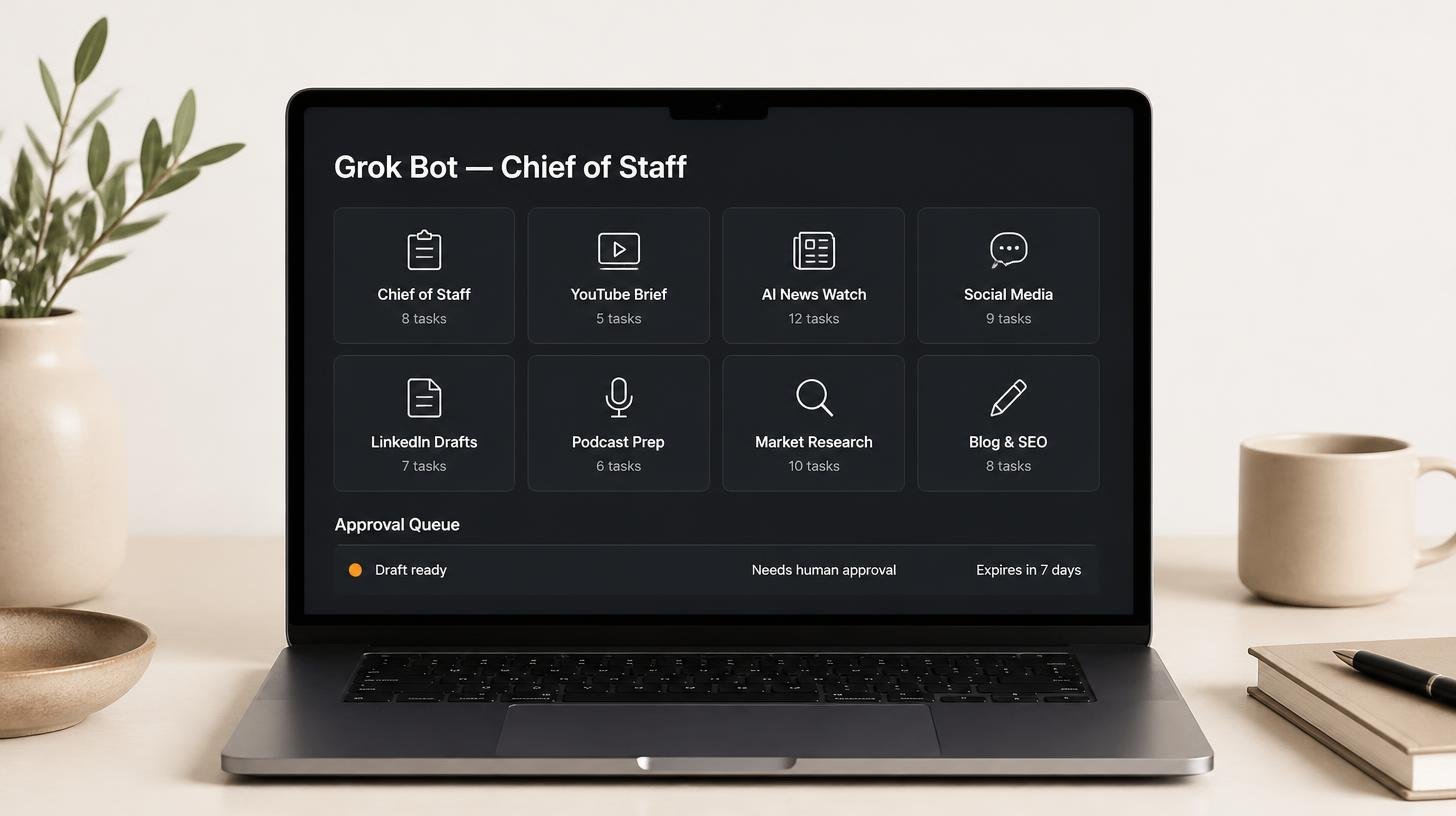
How my Grok Bot chief of staff grew into eight bots
Six weeks on, my Grok Bot chief of staff runs seven specialist bots. What they do each week, what br...
Claude skills for finance, and how to build your own
Claude skills for finance: the eight in Anthropic's Finance plugin, what they did on real data, and ...

How to create Claude Cowork skills by doing the work first
Build Claude Cowork skills that work first time. Do the task once, correct it, then have Claude pack...