Manus Agents on Telegram: Meta's Playbook Strikes Again
By Riz Pabani on 16-Feb-2026
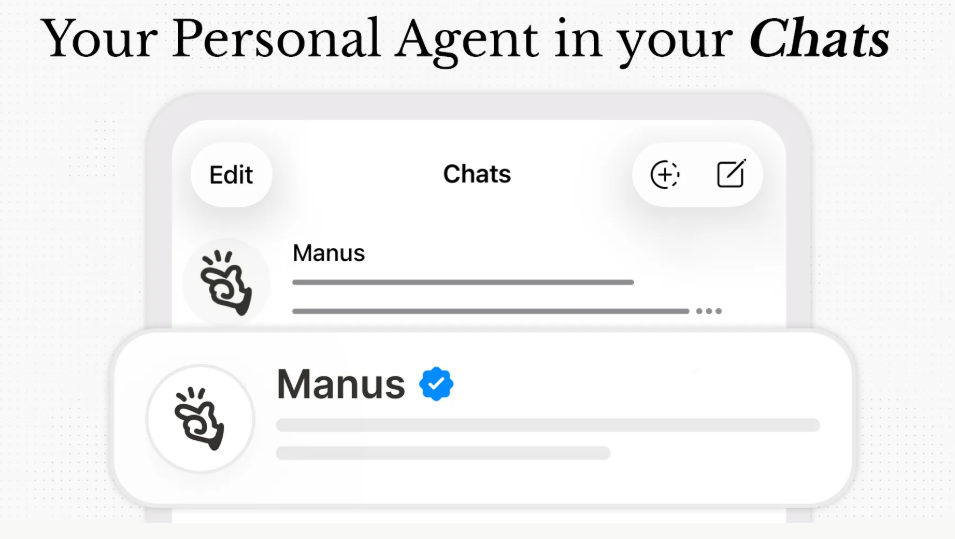
Meta can't buy the competition, so it's building a clone. Sound familiar?
Today, Meta-owned Manus launched "Manus Agents" — a way to interact with its AI agent directly inside Telegram. Scan a QR code, link your account, and start delegating multi-step tasks through chat. Research, data processing, document creation, voice messages, image handling — all inside a messaging app you already use.
If that sounds a lot like what OpenClaw has been doing for months... well, that's because it is.
The OpenClaw phenomenon Meta couldn't ignore
To understand why Manus Agents exists, you have to understand the earthquake that OpenClaw caused.
Originally published in November 2025 under the name Clawdbot (later renamed twice — first to Moltbot after Anthropic's trademark complaints, then to OpenClaw), Peter Steinberger's open-source AI agent exploded in late January 2026. The numbers were staggering: 60,000+ GitHub stars in 72 hours, now north of 200,000. Developers were calling it the closest thing to JARVIS anyone had actually built.
The core idea was elegant: instead of building yet another AI interface, meet users where they already are — inside their messaging apps. OpenClaw runs locally on your machine, connects to an LLM of your choice, and lets you control it through WhatsApp, Telegram, Discord, Slack, Signal, and more. People documented it browsing the web, summarizing PDFs, scheduling calendar entries, conducting agentic shopping, and managing emails — all from a chat window.
The killer feature? Persistent memory. OpenClaw remembers your past interactions across weeks and adapts to your habits. It's not just an assistant you talk to; it's one that learns you.
And it's free. Open source. Self-hosted. Your data never leaves your machine.
Enter Meta, checkbook in hand
Meta wanted OpenClaw. Reports suggest they were part of a bidding war for the project. They lost. On February 14, Steinberger announced he was joining OpenAI and moving OpenClaw to an open-source foundation.
But Meta wasn't empty-handed. They'd already secured Manus — the Chinese AI agent startup they acquired for roughly $2 billion in late 2025. Manus had hit $100 million in annual recurring revenue within eight months of launch, the fastest any startup had reached that milestone with paying customers.
So if you can't own the open-source darling, you do the next best thing: you ship a competing product that does the same thing, faster, with zero setup required.
The Zuckerberg playbook: if you can't buy them, clone them
This is not new behavior for Meta. It is, in fact, the company's most reliable growth strategy.
The canonical example: Snapchat. In 2013, Evan Spiegel rejected Zuckerberg's $3 billion acquisition offer. By 2016, Instagram launched Stories — a near-identical copy of Snapchat's signature feature. Within a year, Instagram Stories had more daily users than all of Snapchat — and by 2018, the gap had only widened. Spiegel later changed his LinkedIn title to "VP Product @ Meta" as a wry acknowledgment of how thoroughly his ideas had been adopted.
But it didn't stop at Stories. Facebook Marketplace arrived to compete with peer-to-peer shopping platforms. Messenger Rooms appeared when Zoom was surging. Instagram Reels was TikTok's format, repackaged. Threads was Twitter's replacement, launched within days of Twitter's self-inflicted chaos.
As one analyst put it: Zuckerberg has a history of finding a competitive product, replicating it, and making it better — or at least making it more widely available.
Manus Agents on Telegram is the latest chapter in that playbook.
What Manus Agents actually offers
Credit where it's due — the product isn't a lazy copy. It's a polished, zero-friction take on the agent-in-messaging concept:
- Zero setup: No installation, no API keys, no terminal commands. Scan a QR code and go.
- Full task execution: Multi-step research, data processing, and document creation directly in chat.
- Rich media support: Send voice messages, images, and files. Get transcriptions, image edits, and analysis back.
- Two model tiers: Manus 1.6 Max for complex tasks, Manus 1.6 Lite for quick queries.
- Privacy boundaries: The agent only accesses messages sent directly to it — no visibility into other Telegram conversations or contacts.
It's available to all Manus users regardless of subscription tier, with plans to expand to Messenger, WhatsApp, LINE, Slack, and Discord in the coming weeks.
Why Telegram first? The strategic calculation
Here's where it gets interesting. Meta owns WhatsApp. Meta owns Messenger. But Manus Agents launched on Telegram.
There are a few likely reasons. The Manus acquisition is still under review by Chinese authorities, which may limit how tightly Meta can integrate Manus into its own platforms right now. There's also a testing angle — launch on a platform you don't own so that if something goes sideways (and notably, Telegram already suspended the Manus agent account briefly after launch), it doesn't splash back on your flagship products.
But there's a deeper strategic layer. In January 2026, WhatsApp updated its Business API terms to ban general-purpose AI chatbots, explicitly prohibiting AI model providers from distributing chatbots on the platform. OpenAI, Perplexity, Luzia — all affected. The only general-purpose AI assistant allowed inside WhatsApp? Meta AI.
Meta is building a moat. And Manus Agents on Telegram is the battering ram aimed at everyone outside the walls.
The real battle: who owns the agent layer?
This isn't really about Telegram. It's about a much bigger question: will AI agents live inside messaging apps, and if so, who controls them?
The thesis is compelling. People already express their intentions through messaging. They already live in these apps. An AI agent that operates inside your existing chat — rather than requiring you to open a separate app — eliminates friction in a way that standalone AI products can't match.
OpenClaw proved the demand. Manus Agents is Meta's attempt to capture the supply side with a product that trades OpenClaw's flexibility and privacy for convenience and polish.
The comparison is stark:
| OpenClaw | Manus Agents | |
|---|---|---|
| Cost | Free (open source) + API costs | $39–$199/month |
| Hosting | Self-hosted, data stays local | Cloud-based (Meta's servers) |
| Setup | Technical — requires server, API keys | Zero — scan QR code |
| Transparency | 200,000+ devs reviewing public code | Closed source, opaque |
| Platforms | WhatsApp, Telegram, Discord, Slack, Signal, iMessage, Teams | Telegram (expanding) |
For developers and privacy-conscious users, OpenClaw wins on every axis except ease of setup. For the other 99% of people who will never SSH into a server? Manus Agents is the answer Meta is betting on.
What happens next
The next 30 days will be telling. Manus has promised specialized agents that can be plugged into group chats, expansion to WhatsApp and Slack, and native Windows and Mac desktop apps. Meanwhile, Steinberger is heading to OpenAI with a mandate to bring agents to everyone — backed by the distribution and resources of the largest AI company on the planet.
Meta's $2 billion bet on Manus is fundamentally a defensive play. If AI agents become the primary interface for getting things done — and every trend suggests they will — then the company that owns the messaging platform but not the agent layer becomes, as one analyst described it, just a pipe.
Zuckerberg has seen this movie before. He didn't let Snapchat own ephemeral content. He didn't let TikTok own short-form video. He's not going to let OpenClaw — or OpenAI — own the agent-in-messaging paradigm without a fight.
Whether that fight produces something genuinely innovative, or just another well-resourced copy, is the question worth watching.
Related Articles
AI cited my site 18,400 times and I had no idea
Google Search Console has a hidden report on how often AI Overviews and AI Mode show your site. Mine...
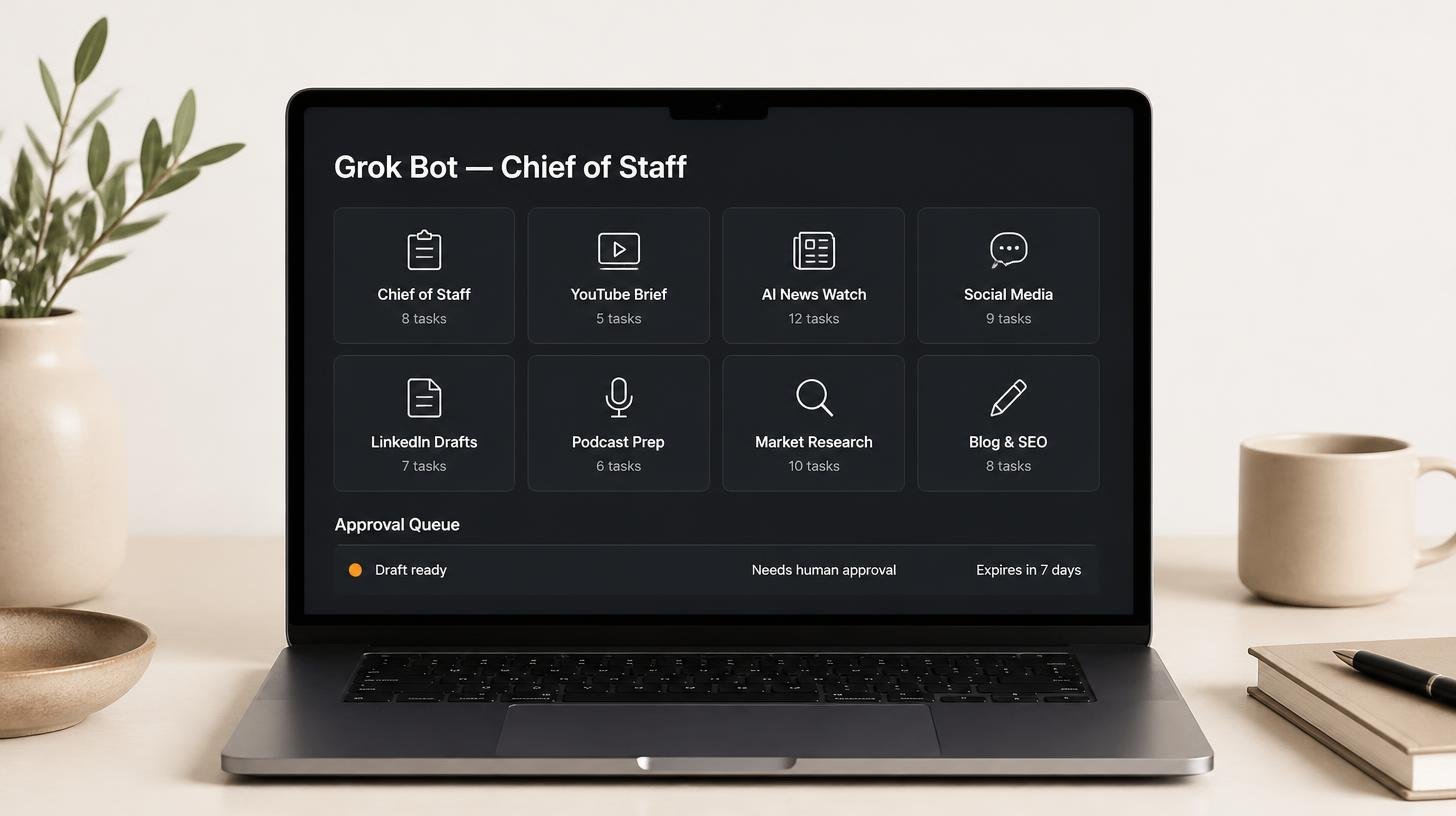
How my Grok Bot chief of staff grew into eight bots
Six weeks on, my Grok Bot chief of staff runs seven specialist bots. What they do each week, what br...
Claude skills for finance, and how to build your own
Claude skills for finance: the eight in Anthropic's Finance plugin, what they did on real data, and ...
How to create Claude Cowork skills by doing the work first
Build Claude Cowork skills that work first time. Do the task once, correct it, then have Claude pack...